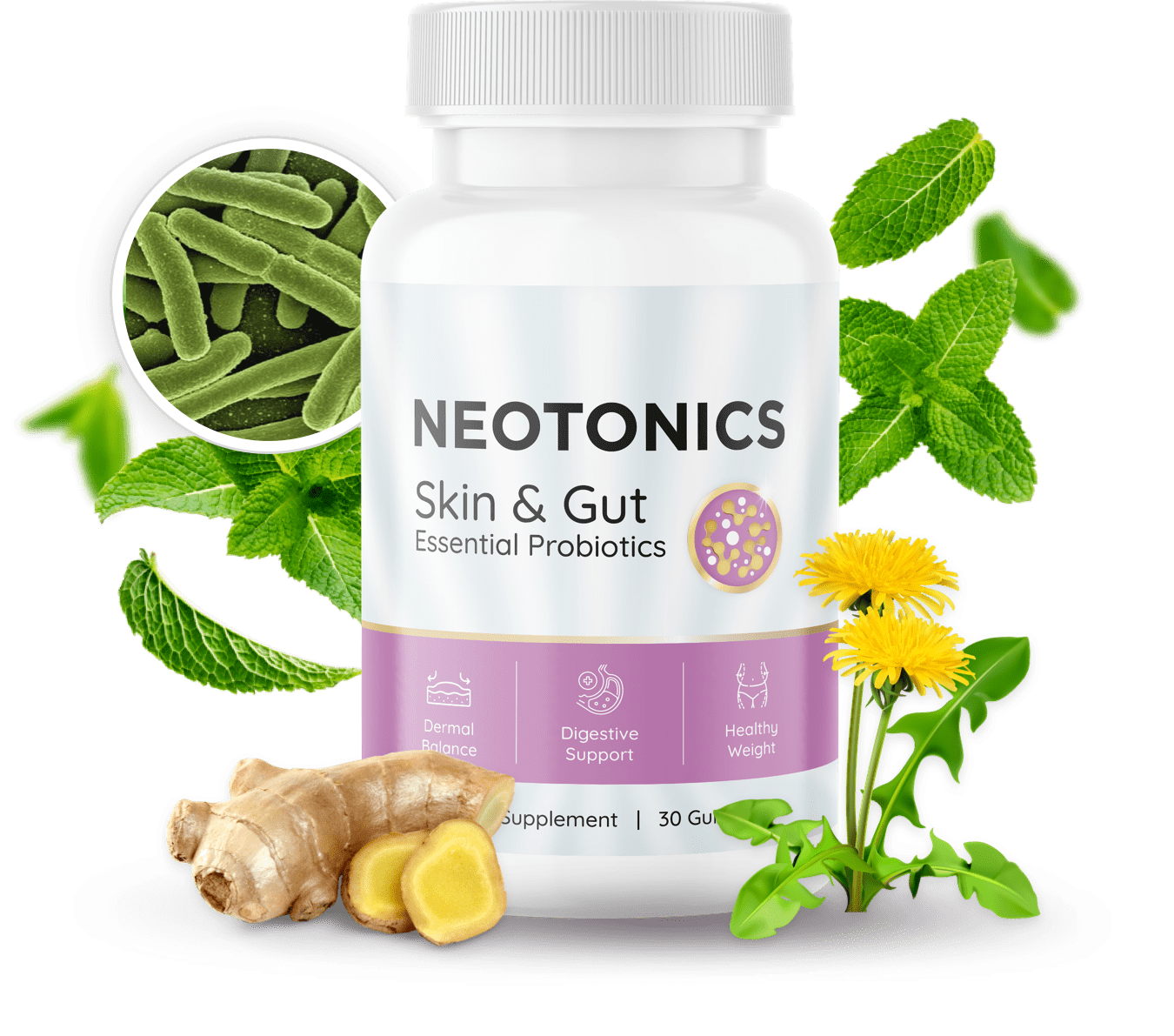
Neotonics are one gummy chew per day. The theory is that your digestion can affect the glow of your skin from the food you ingest. Each gummy contains both beneficial probiotics and nine other natural botanical elements.
500 million good bacteria that stay strong on the shelf — no fridge needed
Nine plant ingredients, including Babchi, Dandelion, Fenugreek and Lion's Mane
A special fibre called Inulin that feeds those good bacteria
30 gummies in each bottle · plant-based · no pills to swallow
✦ 60-Day Money-Back Guarantee•One Gummy Daily•Ships from the USA
500M
CFU Per Gummy
10
Total Ingredients
30
Gummies Per Bottle
60-Day
Guarantee
Gut-SkinAxis
🌱 Non-GMO
🍬 Gummy Format
🇺🇸 US Shipping
About the Product
What is Neotonics?
Most of us try to fix skin problems from the outside. We buy creams and lotions and rub them on. That helps with some things. But it does very little for others. It is why a lot of costly skin creams end up disappointing people.
◆ In one sentence: Neotonics is a daily gummy that helps your skin in a roundabout way. It looks after your stomach and gut first, so your body can take in more of the goodness your skin needs to stay fresh.
Each gummy has about 500 million good bacteria called Bacillus Coagulans. It also has nine plant ingredients picked to help your digestion and your skin. One bottle holds 30 gummies. That is one month's worth, taking one a day.
We chose the gummy as the vessel for this. And here is the honest truth about most supplements: people buy a bottle of pills, take them for two weeks and forget. A gummy you have to chew, remember to spit it out, etc. You will be way more likely to take that every day, which means your gut health supplements will actually work.
🦠
A Spore-Forming Probiotic Strain
The Bacillus Coagulans spores can encapsulate themselves in a protective coating that shields the microbes from the high-acid environment in our stomach, thereby enabling them to survive transit to the small intestine to populate the gut. Spores also exhibit great pantry shelf stability and do not necessitate refrigeration, differentiating them from many probiotic supplements, like yogurt.
🌾
Prebiotic Fibre Included
The only reason I can see for this gummy to include inulin would be to act as a probiotic. Adding a healthy dose of prebiotic fibre would feed the healthy new bacteria that it introduces and help grow the beneficial bacteria already present in your gut.
🌿
Botanicals With Traditional Use
Ginger, fennel, slippery elm and lemon balm have all been used for tummy troubles for hundreds of years. Babchi and Lion's Mane are the newer additions. They are there for your skin and your cells.
🍬
Built for Actually Sticking With It
The best supplement is the one you actually remember to take. One chewy gummy a day is easy. That is why people stick with it when they give up on bottles of pills.
The link between your gut and your skin is real, and scientists are still studying it. Here is what the gummy is meant to do, step by step.
1
Rebalancing the Microbiome
The gummy adds good bacteria to your gut and feeds the ones already there. The aim is simple: more good bacteria than bad ones. Everything else builds on this first step.
2
Possible digestive support
If your gut is not working well, you only take in a small part of the goodness from your food. When your gut works better, more of the vitamins your skin needs actually reach it. This is the most important step.
3
Supporting Skin Cell Turnover
Your skin makes new cells about every 28 days when you are young. As you get older, this slows down a lot. Making new skin needs goodness from food. Take in more goodness and your skin can renew better — that is what makes skin look fresh instead of tired.
4
Reducing Oxidative Stress
Babchi, ginger and lemon balm all help protect your cells from damage. This kind of damage breaks down collagen, which is what keeps skin firm. Less damage means your skin holds its shape better as the years go by.
Ingredients
What's in Every Gummy
One good bacteria and nine plants. Here is what each one does — and where the proof is strong or still thin.
🦠Probiotic · 500M CFU
Bacillus Coagulans
You are going to be seeing a whole lot of this. It has a high degree of evidence behind it. Its shell makes it resistant to stomach acid. Evidence supporting its ability to help with bloating, comfort and regularity. It has less than the amounts found in some studies. This fact is masked by how resistant the strain is.
🌾Prebiotic Fibre
Inulin
This is chicory root fibre. It is an insoluble fibre that your body does not fully digest but feeds the beneficial bacteria in your gut. It makes sense to combine this fibre source with your bacteria in one gummy. One caveat to note is that it can initially cause mild gas or bloating if you have not taken in much fibre recently.
🌸Skin Support
Babchi (Bakuchiol)
Babchi contains bakuchiol. You often find it added into face creams as a substitute for retinol. Babchi is gentler, safer and not photosensitive. The trick with these studies is, nearly all studies were done topical. Not inside the human body by swallowing or digesting. Which makes these gum studies basically hopeful. Babchi has some cool antioxidants.
🌼Digestive Support
Dandelion
Traditional herbalism use for dandelions includes benefits for the liver, digestive system, and diuretics. For instance, a healthy liver clears waste from the body, and thus a healthy liver contributes to clear skin, an observation noted in folk medicine for a long time.
🌱Hydration & Skin
Fenugreek
Fenugreek is full of a soothing gel-like substance and it helps protect your cells. It has been used for both tummy and skin troubles. One important point: it can lower your blood sugar. Please mention it to your doctor if you have diabetes or take tablets for your blood sugar.
🌿Digestive Support
Fennel
Fennel is one of the oldest remedies for bloating and an upset tummy. It helps relax the muscles in your gut, which eases cramping. That is why you find it in gripe water for babies and in after-dinner drinks around the world.
🫚Anti-Inflammatory
Organic Ceylon Ginger
This is Ceylon ginger, which is gentler than the ginger you buy at the shops. It has been well studied for feeling sick, for keeping things moving, and for calming swelling in the body. Ginger has some of the strongest proof of any plant in this gummy, and calming swelling helps your skin as well as your tummy.
🌳Gut Lining
Slippery Elm Bark
When added to water, it creates a slippery, soothing gel to protect your gut. The gel soothes irritation on the gut's lining instead of the bacteria. They perform a different type of task that complements one another nicely.
🍄Adaptogen
Organic Lion's Mane
This is a mushroom best known for studies about the brain and memory. Why it is in a skin and gut gummy is less clear. It does seem to help the gut lining and the body's defences. Being honest, this is the ingredient with the least clear reason for being here.
🍃Calming
Lemon Balm
Lemon balm is part of the mint family, and studies show it helps people feel calmer. Worry and stress really do upset both your gut and your skin. So having something here to help you feel calmer makes sense — it is not just filler.
Potential Benefits
What Consistent Use May Support
This is based on what the ingredients have been studied for and what people say. The changes are usually gentle and take several weeks. Everyone is different.
🌊
Improved Digestive Comfort
This is what people notice first, and soonest. Less bloating. More regular trips to the toilet. Feeling less heavy after meals. In one review, most people noticed their digestion was better by week two or three.
✨
Brighter, Fresher-Looking Skin
As your body takes in more goodness, some people say their face looks less dull and tired. This takes a lot longer than the tummy changes. Think months, not weeks.
💧
Better Skin Hydration
Fenugreek helps your skin hold on to moisture. Skin that holds water looks fuller, and that softens the look of fine lines.
🛡️
Antioxidant Support
Babchi, ginger and lemon balm all help protect your cells from damage. You will not feel this week to week. But over the years, less damage means your skin keeps its firmness for longer.
😌
A Calmer Gut-Stress Loop
Worry upsets your tummy, and an upset tummy shows on your skin. Lemon balm helps calm that worry. Break the circle at any point and the rest follows.
🥗
Getting More From Your Diet
This is the quiet one, and maybe the best one. When your gut works better, the goodness in the food you already eat actually reaches where it is needed — including your skin.
User Feedback
What Users Are Saying
Three real accounts, including one that is not so glowing. These are one person's experience. They are not a promise of what will happen for you.
★★★★★
"The digestion side was quick — within about two weeks the constant bloating I'd just accepted as normal had genuinely eased off. The skin part took much longer. Somewhere around month three I noticed my face looked less tired in photos. Subtle, but I'll take it."
EW
Emma W.
Portland, OR · Month 3
✓ Verified
★★★★★
"I've abandoned about four supplements because I couldn't keep swallowing capsules every morning. The gummy is the reason I actually stuck with this one — six months in and it's just part of my routine now. That alone makes it different from everything else I've tried."
CB
Carla B.
Tampa, FL · Month 6
✓ Verified
★★★☆☆
"Honest three stars. My digestion is noticeably better and I'm keeping it for that. But I bought it hoping for the dramatic skin transformation the marketing implies, and that hasn't happened. If you want a decent probiotic with skin support as a maybe, fine. If you want a skincare miracle, adjust expectations."
NR
Nadia R.
Chicago, IL · Month 2
✓ Verified
✅ What Works Well
People notice better digestion early — often in 2 to 3 weeks
The gummy makes it much easier to remember every day
The bacteria has a tough shell, so more of it survives your stomach
Includes fibre that feeds the good bacteria, not just the bacteria
The full list of what is inside is shared openly
Plant-based and keeps fine in the cupboard
60 days to try it is a fair amount of time
⚠️ Honest Caveats
Skin changes are small and slow — months, not weeks
The amount of bacteria is lower than in many gut-only supplements
Most Babchi studies rubbed it on the skin, not swallowed it
Gummies have some sugar in them
The fibre can cause a bit of bloating in the first week
Fenugreek can lower blood sugar — check with your doctor if diabetic
It is not a medicine for any skin condition
Usage Guide
How to Use Neotonics
One gummy a day. That is the whole instruction. What follows is what makes the difference between people who see results and people who give up in week three.
1
Take One Gummy Daily — Chew It Properly
Take one gummy a day and chew it well. Do not swallow it whole. Chewing matters more than you might think. It starts breaking things down and gets your digestion going, which is exactly what the gummy is meant to help. Always follow the directions on your own bottle.
2
Same Time Every Day, Anchored to a Habit
Taking it every day matters far more than what time you take it. Most people find breakfast works well. The trick is to link it to something you already do without thinking — your cup of tea, or brushing your teeth. Forgetting is the number one reason supplements do not work. Not the ingredients.
3
Expect an Adjustment Week
Some people get a bit of bloating or wind in the first few days. That is usually the fibre and your gut settling into its new balance. It normally passes within a week. It does not mean the gummy is not working — if anything, it means something is happening. If it carries on past two weeks, stop and speak to your doctor.
4
Judge Digestion at 3 Weeks, Skin at 90 Days
These are two very different timelines, and mixing them up is the most common mistake people make. Your digestion usually changes in two to three weeks. Your skin makes new cells about every 28 days, and slower as you get older. So you need several of those cycles before looking in the mirror tells you anything useful. Ninety days is the honest answer.
5
Take Photographs at the Start
Skin changes so slowly that your memory cannot be trusted. Take a photo in daylight on day one. Then again at day 30, 60 and 90. Same spot, same time of day, no makeup. Without that first photo you will either miss a real change or talk yourself into one that is not there.
6
Keep Your Topical Routine Going
Neotonics works from the inside. It does not replace your sun cream, your face wash or your moisturiser. The sun is by far the biggest cause of ageing skin, and no gummy beats putting sun cream on every day. Use this alongside your usual routine, not instead of it.
☀️
Be Sun-Aware With Babchi
Babchi comes from a plant family that can make skin more sensitive to sunlight. Whether the small amount in a gummy matters is not clear. But the sensible answer is easy: wear sun cream every day. You should be doing that anyway.
🩺
Check With a Doctor if You're on Medication
Fenugreek can lower blood sugar, which matters if you take diabetes tablets. Dandelion makes you pass water more, which matters if you take blood pressure tablets. If your body's defences are weak, ask before taking any good bacteria. And if you are on any prescription, just have a quick word with your doctor first.
🍬
Account for the Sugar
Gummies need some sugar to hold their shape. It is only a small amount. But if you are diabetic or watching your sugar closely, check the label and count it as part of your day rather than ignoring it.
📦
You Order It For Time
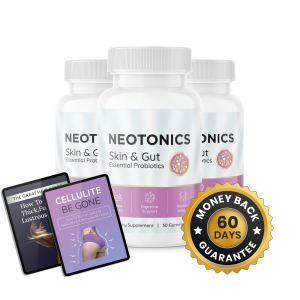
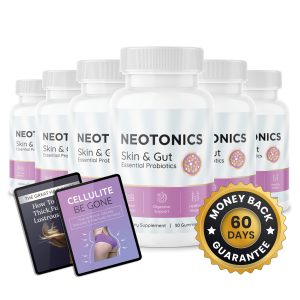
One bottle is 30 gummies, which is 30 days. That is less than a third of the time you need to judge it fairly. Three bottles covers the full 90 days when skin changes would show. It also costs less per bottle and stops you running out and losing the habit.
Pricing
Order Neotonics
Because it takes around 90 days to judge this fairly, three bottles is not just cheaper per bottle. It is the one that matches how the gummy actually works.
Try It — 1 Bottle
$99
$69
30-day supply · 30 gummies
+ Shipping
🛡 60-Day Money-Back Guarantee
VISAMCAMEXDISC
Most Popular — Best Value
Full Cycle — 3 Bottles
$297
$177
90-day supply · $59 per bottle
Save $120 + Free US Shipping
🛡 60-Day Money-Back Guarantee
VISAMCAMEXDISC
Best Price — 6 Bottles
$594
$294
180-day supply · $49 per bottle
Save $300 + Free US Shipping
🛡 60-Day Money-Back Guarantee
VISAMCAMEXDISC
The prices shown here are a guide only. Please check the current price, what is included, postage costs and the money-back period on the official order page before you buy.
60Day Guarantee
60-Day Money-Back Guarantee
Neotonics comes with 60 days to get your money back, through the official website. Here is how to make that count. Take one gummy every day without missing any. Photograph your skin on day one. Check your digestion at three weeks and your skin at sixty days. A money-back promise is only worth something if you actually give the product a proper go inside that time. Sixty days is long enough to know if the tummy side is working for you.
An honest look at how this compares with the other options — including where those other options do better.
Feature
Neotonics
Standard Probiotic Capsules
Collagen Powders
Topical Skincare
Targets gut-skin axis
✓ Yes
⚠ Gut only
⚠ Skin only
⚠ Surface only
Includes prebiotic fibre
✓ Inulin
⚠ Sometimes
✗ No
✗ No
Probiotic CFU count
⚠ 500 million
✓ 5–50 billion
✗ None
✗ None
Ease of daily adherence
✓ Chewable gummy
⚠ Capsules
⚠ Mixing required
⚠ Multi-step
Speed of visible skin results
⚠ 60–90 days
✗ Not targeted
⚠ 8–12 weeks
✓ 2–6 weeks
No refrigeration needed
✓ Spore-forming
⚠ Strain dependent
✓ Yes
✓ Yes
Monthly cost
⚠ $49–$69
✓ $15–$40
⚠ $25–$50
✗ $30–$200+
Questions
Things People Ask Before Ordering
It is a chewable gummy you take once a day, built around the link between your gut and your skin. Each gummy has about 500 million good bacteria plus nine plant ingredients: Babchi, Dandelion, Inulin, Fenugreek, Fennel, Ceylon Ginger, Slippery Elm Bark, Lion's Mane and Lemon Balm. Each bottle holds 30 gummies, which is one month at one a day. It is plant-based.
There are two different answers here. Your digestion — less bloating, more regular — usually changes within two to three weeks. Your skin takes much longer, because your skin makes new cells about every 28 days, and slower as you get older. Sixty to ninety days is a fair time to judge the skin side. And be prepared: the changes people report are gentle, not dramatic.
That is a fair question and deserves a straight answer. Yes, 500 million is lower than many gut supplements, which often boast 5 to 50 billion. But this type of bacteria has a tough shell, so far more of it survives your stomach acid and gets where it needs to go. That means the numbers are not really comparing like with like. Still, being honest: if fixing your gut is your main goal rather than your skin, a stronger gut-only supplement may suit you better.
Most people get on with these ingredients fine. The most common thing is a bit of bloating or wind in the first week while your gut settles. That usually passes on its own. A few things worth knowing: Fenugreek can lower blood sugar, so mention it if you are diabetic. Dandelion makes you pass water more, which matters if you take blood pressure tablets. Babchi comes from a plant family that can make skin more sun-sensitive, so wear sun cream. And if your body's defences are weak, ask your doctor before taking good bacteria. If you are pregnant, breastfeeding, or on any prescription, check with your doctor first.
No. Neotonics is a food supplement, not a medicine. It cannot claim to treat any skin condition. Scientists are genuinely interested in how gut health links to skin problems, but that is a long way from a gummy being a treatment. If a doctor has told you that you have acne, rosacea or eczema, please see a skin specialist. This may sit alongside their care. It does not replace it.
Because skin changes take 60 to 90 days, one bottle is not really enough to judge it fairly. You would be deciding at day 30, before the skin side has had any chance to show. Three bottles covers the full 90 days and costs less per bottle. Six bottles only makes sense if you have already tried it and know it suits you. Committing to six months of something untried is a lot to take on.
You buy directly from their website. Good bacteria do not withstand warmth over time. Bought on an unofficial site? The bottle probably sat for a bit or will soon expire. The numbers will not really matter, nor does your money back guarantee, if the bottle you receive is not up to par, meaning its full strength. I will not buy any other way.
Most of the time yes. If you are taking probiotics etc., it is going to have a similar impact, but it will not harm you. Collagen works in a separate way and goes along well. Worth checking with your chemist would be the sugar-lowering drugs because of the Fenugreek and blood pressure drugs because of the Dandelion. Make a full list of all your medication as opposed to remembering.
Start Where Your Skin Actually Begins
One gummy a day. 500 million good bacteria and nine plants. Your digestion usually settles in the first few weeks. Your skin asks for ninety days of patience. There are 60 days to get your money back, so the honest cost of finding out is your time, not your money.